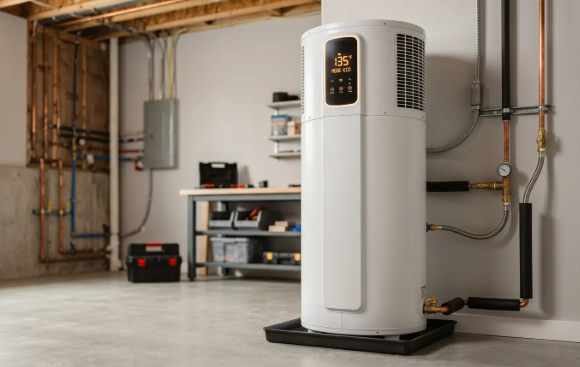
For many Arizona homeowners, heat pump water heaters can be worth the higher upfront cost because they use substantially less electricity than conventional electric water heaters and can perform efficiently in a warm climate. The answer still depends on your home. Installation location, electrical requirements, equipment cost, and how long you expect to remain in the property all affect whether the investment makes sense.
Advantages of a Heat Pump Water Heater in Arizona
Heat pump water heaters offer two particularly important advantages in Arizona: favorable operating conditions and lower energy use.
Warm Climate Efficiency
To say it’s warm most of the time in Arizona is an understatement. For example, Sun City West temperatures average above 70 degrees 10 months a year and typically average more than 100 degrees in June, July, and August. That helps heat pump water heater performance.
Heat pumps work by pulling heat from the surrounding air and transferring it into the water stored in the tank. Instead of creating all of its heat through electric resistance, it moves existing heat from one place to another. When a unit has adequate airflow and clearance, those warmer ambient conditions give the heat pump a ready source of heat to capture.
A garage can be an especially practical installation location. It often provides more air volume than a small utility closet and can accommodate the cooler, drier air the unit releases while operating.
Energy Savings
There is a higher upfront cost to install a hybrid unit, so it’s natural to ask: Are heat pump water heaters worth it? Energy efficiency is one of the strongest reasons homeowners consider switching from a standard electric water heater to a heat pump model. ENERGY STAR says certified heat pump water heaters use about 70% less energy than standard electric water heaters and can save a household of four approximately $550 per year on electricity.
Lower electricity consumption can help offset the higher purchase and installation cost over time.
What Are the Disadvantages of a Heat Pump Water Heater?
If you are asking what are the disadvantages of a heat pump water heater, the biggest tradeoff involves the initial cost.
Higher Upfront Cost
Heat pump models generally cost more than standard electric resistance water heaters. Installation can also be more involved. Depending on the home and existing setup, additional electrical work, condensate drainage, or changes to the installation area may be needed.
Space and Airflow Requirements
Heat pump water heaters need access to surrounding air because that is where they obtain the heat used to warm the water. A large garage or utility area may work well, while a tightly enclosed closet can be less suitable depending on the equipment and manufacturer requirements.
Poor airflow can reduce performance and may require changes to the installation location.
Operating Noise
A conventional electric resistance water heater is generally quiet because it has no compressor or fan.
A heat pump model has both. That does not necessarily make it loud, but you should expect some sound when it’s operating. Location matters more when the water heater is close to bedrooms, living spaces, or frequently occupied areas.
Slower Recovery in Efficient Modes
Heat-pump-only operation can take longer to recover after periods of heavy hot-water use than conventional electric resistance heating. Many hybrid models address this by activating resistance heating when additional recovery is needed. That can restore hot water faster, but electricity consumption increases while the resistance elements are operating.
Possible Electrical Modifications
Some heat pump water heaters require a dedicated 240-volt circuit and adequate electrical panel capacity. A home that already has compatible electrical service may require little additional work. Others may need a new circuit, wiring modifications, or other electrical changes.
| What Are the Advantages of a Heat Pump Water Heater> | What Are the Disadvantages of a Heat Pump Water Heater? |
| Uses substantially less electricity than standard electric models | Higher upfront equipment cost |
| Can lower monthly electricity bills | Installation may be more complex |
| Arizona’s warm climate can support efficient operation | Needs adequate space and airflow |
| Can cool and dehumidify the surrounding area | Fan and compressor produce some noise |
| Hybrid operation can provide additional heat when needed | Backup resistance heating reduces efficiency |
| Can provide long-term operating savings | Some homes may require electrical work |
When Does the Higher Upfront Cost Make Sense?
For homeowners asking are heat pump water heaters worth it, you’ll want to think about more the just the equipment cost and initial price. An investment may make more sense when:
- Your existing water heater already needs replacement.
- Your home has a suitable garage or other well-ventilated installation location.
- Extensive electrical modifications are not required.
- Reducing long-term electricity use is a priority.
- You plan to remain in the home long enough to benefit from lower operating costs.
For many Arizona homes, the combination of warm operating conditions and substantially lower electricity use can make heat pump technology an attractive option.
George Brazil has been in business for more than 70 years and serving the Phoenix metro area for more than 35 years. Schedule water heater installation service with George Brazil Plumbing & Electrical today. You’ll get a detailed inspection and upfront pricing with options.
