In a busy acute-care hospital, operational friction shows up in small but costly moments: delayed patient transfers, staff searching for equipment, and teams working around assets they cannot reliably locate. These delays compound across thousands of shifts, reducing throughput and pulling clinical time away from care. The issue is often not a shortage of equipment, but a shortage of trusted spatial visibility.
Before evaluating vendors or hardware, leaders need a practical answer to what does RTLS stand for inside a hospital. At its core, RTLS creates a continuous, verifiable view of where mobile assets, people, and workflows are moving across the facility.
That visibility changes the operating model. Instead of reacting to missing equipment or stalled transfers, hospitals can manage movement, availability, and utilization with evidence rather than guesswork.
Why Asset Hoarding Is a Visibility Problem
Asset hoarding is one of the clearest symptoms of poor location awareness. Staff may hold infusion pumps, telemetry units, wheelchairs, or other high-demand equipment in nearby rooms because they cannot risk losing time during a critical moment. The behavior is rational at the shift level, but costly at the system level.
When centralized systems show low availability, procurement teams may buy more equipment to close an apparent gap. The result is often a larger fleet with the same visibility problem: higher maintenance cost, incomplete utilization data, and phantom inventory that exists on the ledger but not where teams need it.
See also: How security scanning tech is enhancing public safety everyday
Turning Location Data into Faster Care Movement
The value of RTLS is not simply knowing where a device sits. The value is reducing the time between need and action. When nurses and support teams spend less time searching for mobile medical equipment, more time returns to bedside care, patient movement, and coordinated response.
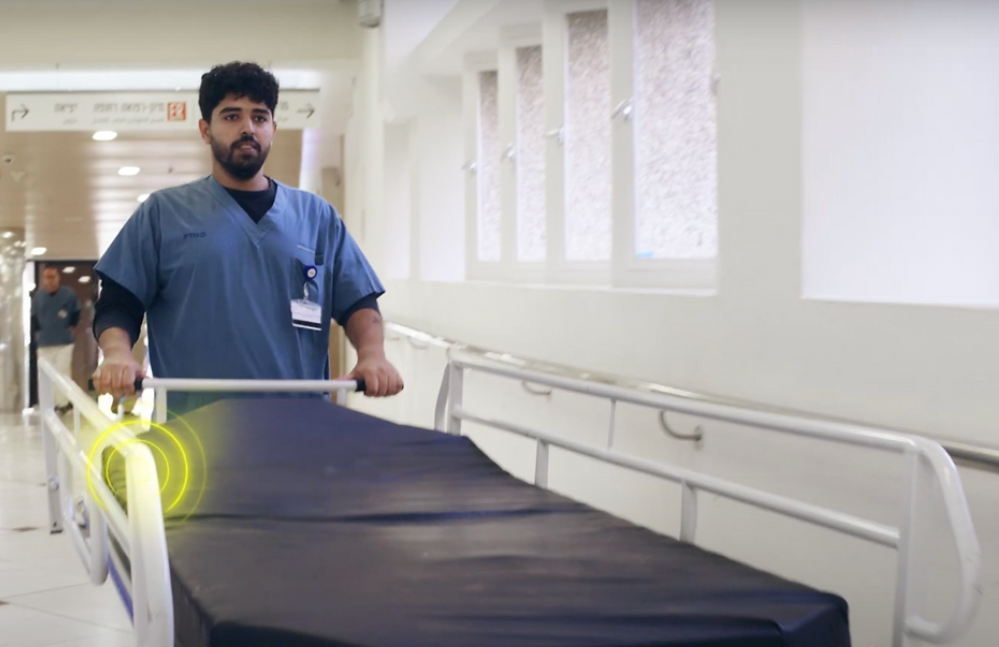
Patient transport shows the same pattern. A discharge or transfer can stall because a wheelchair, stretcher, or transport asset is not available nearby. Those delays ripple into emergency department flow, operating room turnover, room readiness, and overall capacity management.
The Infrastructure Question: Avoiding Another Silo
Many early location programs created new problems by adding closed systems on top of already complex infrastructure. Proprietary tags, disconnected dashboards, and isolated wireless networks can leave IT teams managing another silo instead of giving operations a reliable source of truth.
A stronger strategy starts with a technology-agnostic foundation. Location data should feed existing clinical, maintenance, and operational systems so teams can act inside the workflows they already use, rather than monitoring yet another screen.
Where Visibility Protects Capital and Compliance
Clinical engineering teams need to locate registered assets for preventive maintenance, inspections, and recalls. Without reliable location data, technicians lose time searching and compliance work becomes harder to complete on schedule. RTLS gives teams a faster path to the assets that require action.
It also helps control asset loss. Mobile devices can move through loading docks, laundry workflows, third-party transport routes, and facility exits without being noticed. Chokepoint visibility gives administrators a way to identify leakage before it becomes another recurring capital expense.
For hospitals, successful healthcare RTLS deployment depends on more than tags and readers. It requires accurate data, clean integration, and a clear operational purpose: removing friction from the places where delays, losses, and workarounds quietly accumulate.
From Tracking Assets to Engineering Outcomes
LocaXion is a pure-play RTLS and Digital Twin systems integrator focused on business outcomes, not tracking for its own sake.
Because LocaXion is not locked to one technology stack, hospitals can scale with the right architecture for their environment, integration needs, and operational goals.
RTLS shows where assets are. A well-engineered RTLS program shows how the operation can run better.
Reduce asset hoarding, phantom inventory, and workflow drag with an RTLS strategy built for measurable outcomes at https://locaxion.com/
