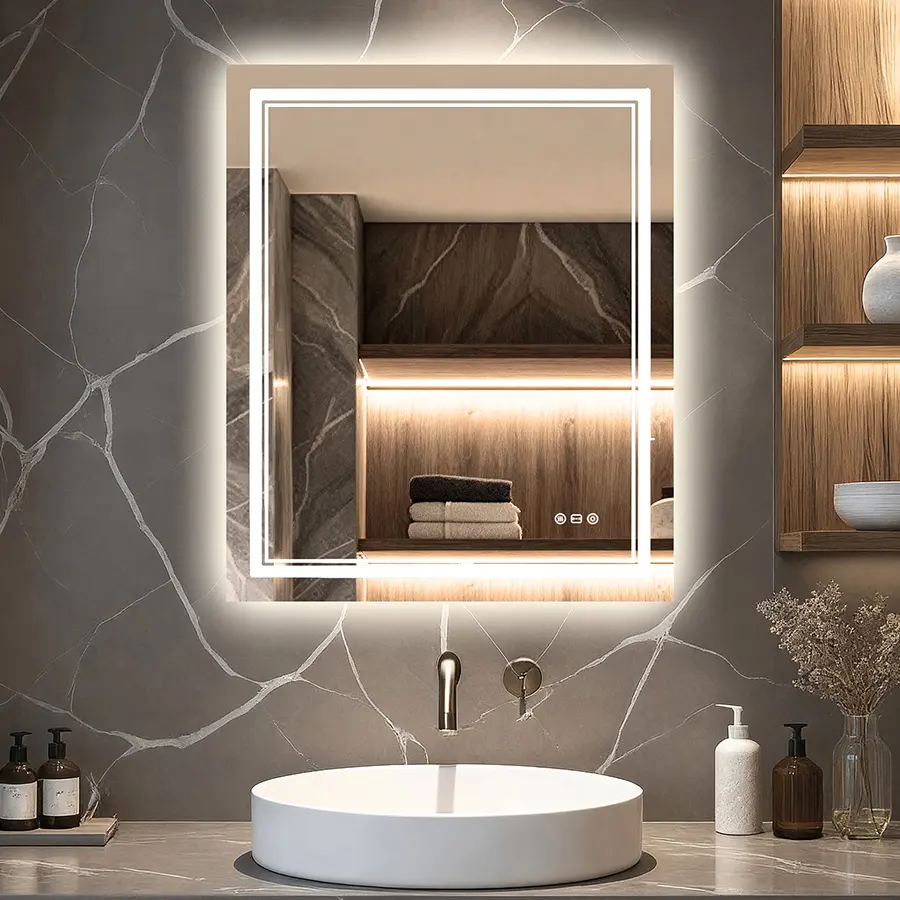
Bathroom mirrors now play a bigger role than simply providing a reflective surface. In modern homes, hotels, apartments, and commercial projects, they can contribute to lighting, visual balance, and the overall atmosphere of the room. Choosing the right mirror therefore requires more thought than selecting a shape that fits above the basin.
For developers, retailers, and interior brands, sourcing matters too. Working with a reliable china led framed mirror manufacturer can make it easier to coordinate frame finishes, lighting specifications, dimensions, packaging, and repeat orders. The aim is to find a product that looks appropriate and performs consistently after installation.
Why Framed LED Mirrors Remain Popular
A framed mirror can give a bathroom a more finished, architectural appearance. The frame creates a visual boundary and can relate the mirror to taps, shower fittings, cabinet handles, and other details.
Integrated LED lighting adds another practical benefit. Instead of relying entirely on ceiling lights, users gain illumination closer to the face. This can support shaving, skincare, hair styling, and makeup when the light is even and properly positioned.
See also: Life’s Simple Lessons
Think Beyond the First Impression
Appearance matters, but the mirror should also suit the way the room will be used. A large mirror may look impressive in a showroom yet feel oversized above a narrow vanity. Likewise, a decorative frame may conflict with nearby fittings or reduce useful reflective space.
A Copper free bathroom mirror can also be worth considering when comparing materials and long-term performance. Copper-free mirror construction uses alternatives to traditional copper-based backing layers, although specifications vary between products. Buyers should review technical information rather than assuming every mirror is manufactured in the same way.
Lighting Quality Deserves Attention
LED mirrors vary in brightness, colour temperature, diffusion, and controls. A design with harsh points of light can be uncomfortable, while well-diffused illumination can create a softer, more useful effect.
The surrounding lighting also matters. The mirror should work with ceiling lights, wall lights, and natural daylight. In some bathrooms, adjustable brightness is helpful because users may want stronger task lighting in the morning and gentler illumination later.
Match the Mirror to the Vanity
Proportion is one of the simplest ways to improve a bathroom design. The mirror should feel connected to the vanity without appearing either too small or excessively dominant.
Designers often begin with the width of the basin unit and select a mirror that leaves balanced spacing at the sides. Alignment with cabinets, splashbacks, or wall panels can make the entire vanity area feel more deliberate.
Frames Need Practical Consideration
Frame colour is usually chosen for visual reasons, but durability and cleaning also matter. Bathrooms are exposed to humidity, fingerprints, splashes, and regular wiping, so finishes should suit the environment.
Black, metallic, brushed, and neutral frames can all work well when they coordinate with the room. Edge quality, joins, mounting points, and the way the frame meets the glass also influence the finished appearance.
Plan Electrical Work Early
An illuminated mirror needs an appropriate electrical connection, so this should be planned before walls and finishes are complete. Leaving the decision too late may lead to visible wiring or unnecessary alterations.
If the mirror includes touch controls, dimming, demisting, sensors, or digital features, planning becomes even more important. Bathroom electrical work should follow local requirements and the manufacturer’s instructions, with qualified professionals used where required.
Packaging Is Part of the Buying Decision
Mirrors are fragile, and damage can happen before installation if packaging is inadequate. Commercial buyers should review how each unit is protected during storage and transport.
Corner protection, internal support, surface protection, and strong outer packaging can reduce risk. For larger orders, it is also useful to understand how damaged items, spare components, and replacements are handled.
Maintenance Should Stay Simple
A good bathroom mirror should remain easy to clean. Soft cloths and suitable glass-cleaning products are generally preferable to abrasive materials that could affect coatings or finishes.
Excess liquid should also be kept away from electrical controls, edges, and openings. Manufacturer-specific care guidance should take priority, especially when special coatings or integrated electronics are involved.
Choosing for Long-Term Value
The best mirror is not necessarily the one with the longest feature list. A well-proportioned design with dependable lighting, suitable materials, straightforward controls, and sensible installation requirements may deliver more value over time.
For commercial projects, consistency is equally important. Before a larger order, buyers should confirm dimensions, finishes, electrical specifications, mounting methods, packaging, and quality expectations.
Conclusion
Bathroom mirrors now combine design, lighting, materials, and installation requirements in one highly visible product. Choosing successfully means looking beyond appearance and considering how the mirror will perform in daily use.
By reviewing proportions, frame construction, lighting quality, electrical needs, packaging, maintenance, and supplier consistency, buyers can make a more informed decision. A carefully selected mirror can support practical routines while giving the bathroom a polished, cohesive finish.
