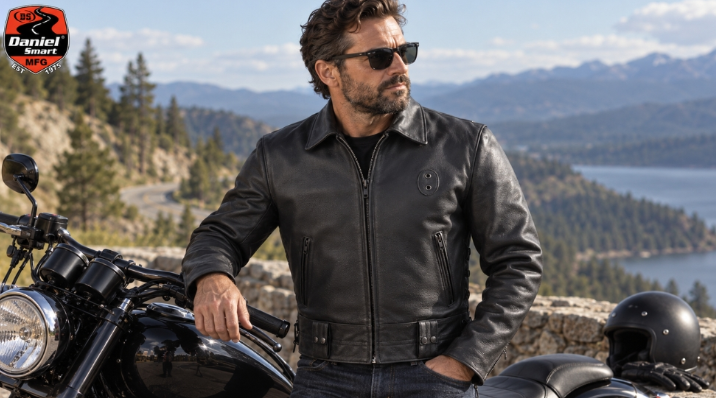
A cruiser motorcycle leather jacket should provide a secure fit, comfortable arm reach, useful storage, wind protection, and enough flexibility for everyday riding. Because cruiser riders often sit in a more relaxed, upright position, jacket design should support long hours on the road without creating pressure around the shoulders, waist, or neck.
Cruiser riders also tend to use their jackets beyond short recreational rides. A jacket may be worn during daily commuting, weekend trips, highway cruising, local meetups, and casual stops throughout the day.
That makes versatility important.
Well-designed men’s leather motorcycle jackets can combine classic cruiser styling with riding-focused features such as action backs, adjustable waists, secure pockets, durable closures, ventilation, and room for protective inserts.
The right jacket should feel natural on the motorcycle while remaining practical when the rider steps off the bike.
What Makes a Motorcycle Jacket Suitable for Cruiser Riding?
Cruiser motorcycles usually place the rider in a relatively relaxed position compared with more aggressive sport-bike ergonomics.
Depending on the motorcycle and handlebar style, the rider may sit upright with the arms slightly forward or extended outward.
That changes what matters in jacket design.
A cruiser jacket should support:
- Comfortable shoulder movement
- Natural handlebar reach
- Proper sleeve length
- Secure waist fit
- Wind management
- Practical storage
- Layering
- Everyday wearability
The jacket should not pull across the shoulders when the rider reaches toward the controls.
At the same time, it should not be so loose that excess leather moves excessively at highway speed.
Why Is Shoulder Mobility Important for Cruiser Riders?
Cruiser handlebars can be wider than those found on some other motorcycle styles.
That wider arm position can increase tension across the upper back and shoulders if the jacket is too rigid.
A jacket designed for riding may use features such as:
- Action backs
- Shoulder gussets
- Flexible upper-back panels
- Riding-oriented sleeve angles
These features allow the arms to extend toward the handlebars without pulling the entire jacket forward.
Shoulder mobility becomes particularly important on longer rides.
A small amount of tension may feel insignificant during a ten-minute trip but become uncomfortable after several hours.
The jacket should move with the rider rather than constantly resisting the riding position.
How Should a Cruiser Motorcycle Leather Jacket Fit?
A cruiser motorcycle jacket should feel secure around the torso without restricting normal movement.
Fit should always be checked in a riding position.
When seated and reaching forward, riders should check whether:
- The shoulders become tight
- The sleeves expose the wrists
- The front bunches excessively
- The back rises too high
- The collar presses against the neck
- The waist becomes uncomfortable
The jacket should provide enough room for the intended layers and any armor inserts.
However, oversized jackets are not ideal simply because cruiser riding has a relaxed appearance.
Too much extra material can create wind flap, reduce comfort, and allow protective inserts to move away from their intended position.
A secure, riding-specific fit works better than a deliberately loose one.
Why Does Sleeve Length Matter on a Cruiser Motorcycle?
Sleeves that look correct while standing may become too short when the rider reaches the handlebars.
Cruiser riders should check sleeve length with their arms extended into the actual riding position.
The sleeves should continue covering the wrist area without creating excessive bunching around the hands.
This is particularly important when combining the jacket with riding gloves.
Cuff design also affects how the sleeve and glove work together.
Adjustable zippers, snaps, or tabs can help riders achieve a more comfortable transition between the jacket sleeve and glove.
What Type of Jacket Length Works Best for Cruiser Riding?
Cruiser jackets generally need enough rear coverage to remain comfortable while seated.
A jacket that is too short may expose the lower back or rise noticeably during longer rides.
At the same time, excessive length at the front can cause the leather to fold or bunch around the waist.
The ideal cut balances:
- Front seated comfort
- Rear coverage
- Waist movement
- Access to pockets
Riders with more upright seating positions may prefer a slightly different jacket length than riders who lean forward.
The best length depends on both body proportions and motorcycle ergonomics.
Why Are Adjustable Waist Features Useful?
Cruiser riders often use the same jacket across different seasons.
A jacket may be worn over a thin shirt in summer and additional layers in cooler weather.
Adjustable waist features help maintain a secure fit as the amount of clothing underneath changes.
Common adjustment systems include:
- Side straps
- Waist tabs
- Buckles
- Zippered adjustments
- Snap closures
These features can also reduce unwanted jacket movement at highway speeds.
The goal is to keep the jacket close enough to the body for comfort without making the waist feel restrictive.
What Pockets Matter Most for Everyday Cruiser Riding?
Everyday riders usually carry a few essential items every time they get on the motorcycle.
These may include:
- Phone
- Wallet
- Keys
- Identification
- Ear protection
- Small documents
- Sunglasses
Pocket security matters more than simply having many pockets.
Zippered or securely closed exterior pockets can help keep items contained while riding.
Interior pockets work well for valuables and items riders want to keep away from wind and weather.
Pocket placement should also be comfortable while seated.
A bulky object stored directly against the waist or stomach may become irritating during longer rides.
A practical cruiser jacket usually balances storage with a clean, uncluttered design.
Why Is Wind Protection Important on Cruiser Motorcycles?
Cruiser riders may spend long periods at steady highway speeds.
Even moderate wind pressure can become tiring over time.
A leather jacket naturally creates a substantial outer barrier, but fit and closures affect how well it manages airflow.
Important wind-management features include:
- Secure front zipper
- Proper collar closure
- Adjustable cuffs
- Waist adjustment
- Correct sleeve length
Gaps around the collar, sleeves, or waist may allow cold air to enter.
This is especially noticeable during early-morning or cooler-weather rides.
Good wind management helps riders maintain comfort without needing excessive additional layers.
Does a Cruiser Leather Jacket Need Ventilation?
Yes, particularly for riders who use leather during warmer weather.
Cruiser riding can involve both open highway miles and slower city traffic.
At higher speeds, airflow naturally increases. At lower speeds, especially in traffic, heat can build quickly inside leather gear.
Useful ventilation features may include:
- Perforated leather
- Front intake vents
- Rear exhaust vents
- Underarm vents
- Sleeve vents
- Breathable liners
A removable thermal liner can also make the jacket more adaptable.
The rider can use insulation during cooler conditions and remove it when temperatures rise.
Should Cruiser Riders Choose a Removable Liner?
A removable liner is useful for riders who want one jacket to cover multiple temperatures.
Cruiser trips often start early and continue for several hours.
Morning conditions may be cool, while afternoon temperatures can become much warmer.
A removable liner allows riders to adjust insulation without replacing the entire jacket.
It is especially useful for:
- Spring riding
- Fall riding
- Cool mornings
- Evening rides
- Multi-hour trips
The jacket should still fit correctly both with and without the liner.
If removing the liner makes the jacket excessively loose, the fit may not be ideal.
Does Armor Matter in a Cruiser Motorcycle Leather Jacket?
Cruiser jackets can include armor-ready pockets or built-in protective inserts just like other motorcycle jackets.
Common areas include:
- Shoulders
- Elbows
- Back
Riders who use armor should evaluate the jacket with the inserts installed.
Armor affects internal space and may change how the shoulders, sleeves, and chest feel.
The jacket should keep protectors aligned without restricting movement.
Leather and impact protection serve different purposes, so riders should consider them as separate parts of the overall gear system.
See also: How Mobile-First Indexing is Reshaping Dental Website Performance
What Type of Collar Is Best for Cruiser Riding?
Collar choice is partly personal, but it should work comfortably with the rider’s helmet and riding position.
A collar that is too stiff or high can create pressure around the neck.
A very open collar may allow more wind into the jacket.
Cruiser riders should consider:
- Neck movement
- Wind exposure
- Helmet compatibility
- Weather
- Personal style
A comfortable collar should remain unobtrusive during head turns and shoulder checks.
Why Does Hardware Quality Matter?
Zippers, snaps, and adjustment hardware receive frequent use.
An everyday cruiser jacket may be opened, closed, adjusted, and worn many times each week.
Durable hardware therefore matters for both convenience and longevity.
Riders should check:
- Main front zipper
- Pocket zippers
- Cuff closures
- Waist adjusters
- Snaps
- Liner attachment points
Hardware should operate smoothly while still feeling secure.
It should also be positioned so it does not create uncomfortable pressure against the rider.
How Important Is Off-Bike Comfort?
Very important for everyday cruiser riders.
Cruiser jackets are often worn during fuel stops, meals, motorcycle events, errands, and casual social situations.
A jacket that works only while seated on the motorcycle may become inconvenient.
Off-bike comfort depends on:
- Jacket weight
- Collar design
- Mobility
- Pocket placement
- Overall fit
- Liner thickness
This is one reason many cruiser riders prefer a jacket that balances riding function with a classic everyday appearance.
Leather vs Denim Jackets for Cruiser Riders
Leather and denim motorcycle jackets offer different characteristics.
Leather is often preferred for its structured feel, classic cruiser styling, durability, and abrasion-resistant qualities.
Men’s denim motorcycle jackets may appeal to riders who want a lighter, more casual outer layer for specific riding conditions.
The better option depends on factors such as:
- Weather
- Riding distance
- Desired protection
- Weight preference
- Seasonal use
- Personal style
For riders who spend considerable time on highways or want traditional cruiser styling, leather remains a common choice.
For lighter local riding, denim-based motorcycle apparel may offer a more casual alternative.
What Features Matter Most for Daily Cruiser Use?
For everyday cruiser riding, the most valuable features usually include:
- Secure riding fit
- Shoulder mobility
- Proper sleeve length
- Adjustable waist
- Secure pockets
- Ventilation
- Wind-resistant closures
- Comfortable collar
- Removable liner
- Armor compatibility
- Durable hardware
The ideal combination depends on the rider’s motorcycle, climate, and typical trip length.
Not every rider needs every available feature.
A jacket should be selected around actual use rather than the longest possible feature list.
Can One Cruiser Leather Jacket Work Year-Round?
In moderate climates, one well-designed leather jacket can cover a significant part of the riding season.
Year-round versatility improves when the jacket includes:
- Adjustable ventilation
- Removable liner
- Layering space
- Secure cuffs
- Waist adjustment
Very hot or very cold climates may still require more specialized gear.
A heavily insulated jacket can become uncomfortable in summer, while a highly perforated jacket may provide too much airflow in colder conditions.
A balanced design usually works best for riders who want one jacket for multiple seasons.
Final Thoughts
A cruiser motorcycle leather jacket should support the relaxed riding position without sacrificing fit, mobility, storage, or weather comfort.
Shoulder movement, correct sleeve length, secure waist adjustment, useful pockets, ventilation, durable hardware, and comfortable off-bike wear all matter for everyday riders.
The best cruiser jacket is not simply the heaviest or most traditional-looking leather jacket. It is the one that works naturally with the rider’s motorcycle, body position, climate, and riding routine.
For riders who regularly move between city streets, open highways, weekend rides, and casual stops, a well-designed leather motorcycle jacket provides the balance of comfort, function, and classic cruiser style needed for everyday use.
