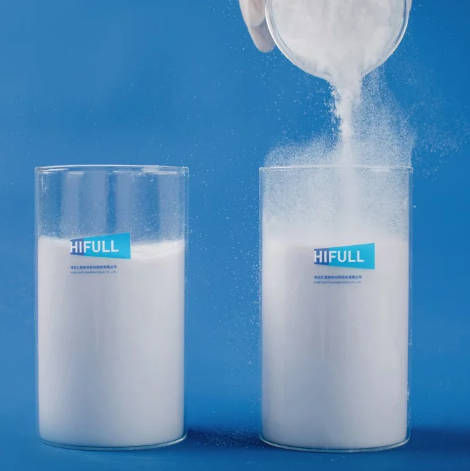
Among the many roles that fumed silica plays across formulation chemistry, its function as a thickening agent remains one of the most widely relied upon. Whether in coatings, adhesives, or specialty resin systems, formulators regularly turn to fumed silica when they need to increase viscosity without significantly altering other key properties of their product. Understanding the mechanism behind this thickening effect helps explain both its strengths and its practical limitations.
The Mechanism Behind Silica-Based Thickening
Unlike polymeric thickeners that increase viscosity primarily through molecular chain entanglement, fumed silica achieves its thickening effect through a physical network-forming mechanism. The nanoscale primary particles fuse into branched aggregates during manufacturing, and when dispersed into a liquid medium, these aggregates interact through hydrogen bonding between surface silanol groups, forming a loose three-dimensional network throughout the formulation.
This network structure is responsible for the viscosity increase observed when fumed silica is added to a liquid system. Importantly, because the network is held together by relatively weak hydrogen bonds rather than strong covalent linkages, it can be temporarily disrupted under applied shear, allowing the formulation to flow more easily during processing or application, before the network reforms once shear is removed.
Why This Distinguishes Fumed Silica from Other Thickeners
This shear-thinning, network-based mechanism gives fumed silica a distinct advantage in applications where both good flow during application and resistance to sagging afterward are required. Many alternative thickening agents provide viscosity build without this same reversible shear-thinning behavior, making fumed silica particularly valuable in coatings and adhesive applications where this dual requirement is common.
Factors Influencing Thickening Efficiency
Several factors influence how effectively fumed silica performs as a thickening agent within a given formulation. Specific surface area is a primary consideration, with higher surface area grades generally providing stronger thickening effects at equivalent addition levels, due to the greater number of potential hydrogen bonding sites available per unit weight of material.
The polarity match between the fumed silica surface chemistry and the base formulation also significantly influences thickening efficiency. Hydrophilic grades tend to build viscosity more effectively in polar systems, while hydrophobic grades perform better in non-polar environments, reflecting the underlying compatibility requirements for effective network formation.
Dispersion Quality and Its Impact on Performance
Perhaps the most operationally significant factor affecting thickening performance is dispersion quality during manufacturing. Inadequately dispersed fumed silica, where agglomerates remain rather than being broken down into a fully distributed network, will underperform relative to its theoretical thickening potential, regardless of how well-suited the grade is to the formulation on paper.
Practical Loading Levels and Testing Approach
Because thickening efficiency varies based on the specific combination of grade, base formulation, and processing conditions, formulators typically determine appropriate loading levels through incremental testing rather than relying on generic dosage guidelines. Starting with a conservative addition level and gradually increasing while monitoring viscosity development allows formulators to identify the optimal concentration for their specific application without overshooting and creating an overly thick, difficult-to-process formulation.
A more detailed technical discussion of fumed silica’s thickening mechanism and its multifunctional properties across different formulation types is available in this resource on fumed silica thickening agent performance, which explores how this network-forming behavior translates into practical formulation benefits.
Combining Fumed Silica with Other Rheology Modifiers
In some formulations, fumed silica is used alongside other rheology modifiers to achieve a more customized viscosity profile than either additive could provide alone. This combined approach requires careful compatibility testing, as interactions between different thickening mechanisms can sometimes produce unexpected results, either enhancing or interfering with the desired rheological outcome.
Frequently Asked Questions
Does fumed silica thicken all types of liquid formulations equally well? No, thickening efficiency varies considerably depending on the polarity and chemistry of the base formulation, with performance generally optimized when the silica surface chemistry aligns well with the surrounding medium.
How quickly does fumed silica’s thickening effect develop after mixing? The network structure typically forms relatively quickly during proper high-shear mixing, though some formulations may show a modest increase in viscosity over the following hours as the network structure fully stabilizes.
Can too much fumed silica cause problems in a formulation? Yes, excessive addition can lead to overly high viscosity, processing difficulties, and potentially reduced clarity or gloss in certain applications, which is why incremental testing to identify the optimal loading level is generally recommended.
See also: How to Build a Scalable Business Model
Conclusion
Fumed silica’s function as a thickening agent relies on a distinctive network-forming mechanism that combines effective viscosity build with beneficial shear-thinning behavior. Understanding the factors that influence this mechanism, including surface area, polarity matching, and dispersion quality, enables formulators to more effectively harness fumed silica’s thickening capabilities across a wide range of applications.
