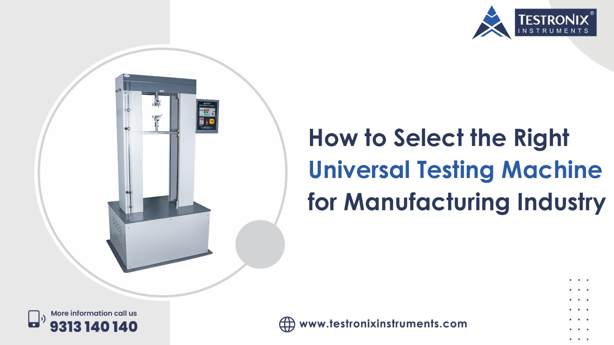
Universal Testing Machine (UTM) is a fundamental piece of equipment for material testing especially in the manufacturing industry. It helps determine the mechanical properties of materials, like tensile strength, compressive strength, and elasticity. Choosing the right UTM ensures accurate test results and efficient lab performance. This article will provide you with a complete guide that helps you in selecting the right machine for your testing requirements.
What is a Universal Testing Machine?
Universal Testing Machine (UTM) measures the mechanical strength of materials by applying controlled tensile or compression forces. It serves as the backbone of material testing and is used to test the mechanical properties of materials. Whether you are testing metals, plastics, composites, or other materials, UTM machines deliver essential data for engineering, quality control, and research.
The versatility of industrial or field testing (UTM) depends on their ability to conduct multiple types of tests under controlled conditions; therefore, they offer flexibility in how and when tests can be conducted. Advancements in technology have contributed to this versatility by allowing modern machines to utilize digital controls, advanced software applications and improved accuracy.
How to Select the Right Universal Testing Machine?
Selecting the right UTM for product testing setup involves understanding the types of machines available, the features that matter most for your specific needs, and how to interpret specifications and options. This guide will walk you through these factors in a clear and structured way.
Find the Right Types of Universal Testing Machines
The first step in selecting a Universal Testing Machine is understanding the two primary types: electromechanical and hydraulic. Each type brings unique strengths suited to different lab applications. Choosing the right type lays the foundation for a reliable testing setup.
Electromechanical UTMs are powered by electric motors and high precision screws. They are highly accurate, have easy control and a well-regulated speed. These machines can be used for routine tests where consistency and repeatability matter. Hydraulic UTMs, however, apply fluid pressure to create force and hence can be used in high-capacity testing.
Electromechanical UTM machines would be your top choice if you are working with materials that are used primarily in educational institutions. They require normal maintenance especially if you are using hydraulic presses for testing purposes.
Many modern UTMs combine intuitive software and advanced hardware, bridging user experience with performance. For example, selecting a model with easily adjustable load cells and automated calibration can significantly improve daily workflow efficiency.
Top Features to Consider of UTM Machine
Load Capacity and Range
Load capacity is one of the most critical factors in choosing a UTM. It should cover the range of forces you expect to encounter in your testing. Machines come in various capacities, from a few kilonewtons for lightweight materials to several hundred kilonewtons for industrial applications.
Assess the type and amount of materials you will test on a regular basis. In general, materials like plastic and thin sheet goods will not require a high-capacity testing machine when compared to testing metals or structural components that will require a higher capacity.
Types of Tests to be Conducted
Universal Testing Machine is valued for its ability to perform multiple kinds of tests, including tensile, compression, bending, and shear tests. Confirm that the UTM model you consider supports all test types relevant to your lab’s workflow.
Tensile tests are used to estimate the behavior of materials under tension, whereas compression tests are used to estimate the behavior of materials under crushing forces. There are also some machines that support the flexural test that is important to plastics and composites. Ensure that the machines’ grips and software are compatible with the tests you will run.
Accuracy and Standards Compliance
Precision is a non-negotiable aspect of material testing. Look for Universal Testing Machines with strong adherence to international standards such as ISO (International Organization for Standardization), ASTM (American Society for Testing and Materials), and DIN (Deutsches Institut für Normung). Certified calibration and traceable results reinforce confidence in your testing data, especially when materials must meet regulatory requirements.
Software plays a major role in data acquisition and interpretation. Advanced systems offer real-time graphs, automatic calculation of mechanical properties, and exportable reports for documentation. A UTM machine with robust software reduces manual calculation errors and saves significant time.
Material Testing and Quality Control
Universal Testing Machines are widely used to test the properties of materials prior to production or shipment by quality control labs. Reliable Universal Testing Machines must provide a consistent performance with lower downtime and more accurate results when testing raw materials in the manufacturing industry. For research and development purposes, UTMs are usually emphasized to derive detailed material behavior in different conditions.
Universal Testing Machines from Testronix Instruments offer precise load measurement, easy controls, and accurate data collection for material testing. Testronix Instruments equips its machines with versatile software and robust reporting tools, enabling industries to analyze material behavior efficiently and ensure quality control.
Industry-Specific Requirements
Different industries place unique demands on UTMs. Aerospace and automotive labs often need machines that can handle a wide range of materials and large capacity loads. Labs that deal with plastic and polymer have a strong emphasis on low-load testing’s flexibility and sensitivity. The testing of biomedical materials requires a high degree of precision but usually at a very small scale which makes precise load cells and tight control very important.
By carefully mapping your lab’s testing needs to UTM capabilities, you prevent unnecessary overspecification or overlooked requirements that could hamper testing efficiency.
See also: Smart Home Technology Explained
Installation, Support, and Warranty
Installing a Universal Testing Machine involves more than placing it in your lab space. Proper setup ensures accurate test results and long-term performance.
When evaluating UTMs, consider the ease of installation and the level of technical support offered by suppliers. Some manufacturers offer on-site installation and training to help you get your lab ready more quickly. Also, find out if remote inspection tools and software updates can help keep your equipment running smoothly for the long haul.
The warranty is commonly asked for as assurance that it may cover parts, labor, and calibration assistance which can reduce unexpected expenses. Choose machines from vendors that have a strong service network and readily available spare parts.
Testronix Instrument is a trusted manufacturer and supplier of universal testing machines, renowned for precision and advanced technology. Their products deliver excellent performance for a wide range of material testing applications including in manufacturing industries.
Conclusion
Selecting the right Universal Testing Machine for the manufacturing industry is a strategic decision that influences the quality of your material testing, the efficiency of your workflows, and long-term operational success. The establishment of product testing setup facilities can be simplified by selecting the type of machines you have, their nominal maximum load (capacity), and the specific requirements of your product testing.
Careful evaluation of your requirements, combined with required quality standards, ensures that the UTM you choose aligns with both current and future testing demands. Investing time in selecting the right model pays dividends in precision, productivity, and confidence in your material testing outcomes.