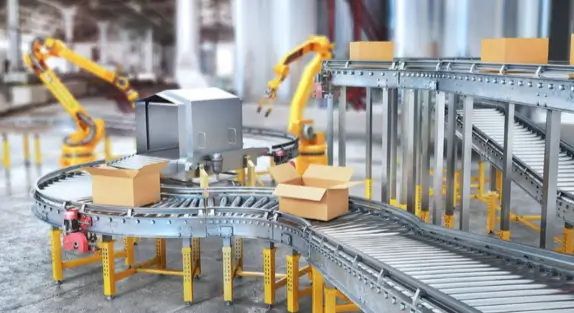
Automation is transforming manufacturing at a speed that would have been considered aspirational a decade ago. On production floors around the world, intelligent systems are replacing repetitive manual tasks, squeezing cycle times and producing a level of consistency that human labor, on its own, could not maintain at scale. For manufacturers dealing with tight margins, expanding order volumes and more complicated product offerings, mechanical packaging is no longer a competitive differentiator but an operational floor. The question is not whether to automate, but how quickly and how strategically.
Evolution of Packaging Technology
Packaging machinery has developed typically across a number of generations. Early mechanization worked basic functions — processing, sorting, labeling — but still required a lot of human time and attention at critical phases. The next generation added dedicated filling and sealing lines that increased capacity but were inflexible.
Of course none of the above is anything like today’s systems. The vertical form fill seal machine is the best example of how integrated packaging solutions have progressed – from film forming to product filling to hermetic sealing in one continuous flow automated operation. A process that used to require an entire team and multiple workstations now operates unattended, delivering repeatable results at a pace no manual process can match.
This has been made possible with the development in servo motors, programmable logic controllers (PLC) and enhanced human machine interfaces (HMI) that enable advanced systems to be operated even by individuals with modest technical knowledge.
Benefits of Automated Systems
The efficiency advantages of packaging machinery are established and cover all aspects of performance that can be quantitatively assessed.
Speed and Throughput – Lines run at full speed, full time, with no fatigue, breaks, or fluctuations in performance. Production levels that are able to support large manual teams are possible by working with a small amount of personnel.
Precision and Uniformity — Automated filling machines are set to an exact level and avoid the over- and underfill inconsistencies that can arise with manual filling. The same criteria applied to every unit, which means simultaneously less waste and fewer customer complaints.
Compliance and Traceability – Up-to-date systems record production information in real time, resulting in audit trails that help food safety and pharmaceutical compliance legislation and retailer traceability requirements.
Labor intensity: Automation allows for more stability in production in labour-poor, high-turnover markets.
See also: Understanding RAKEZ Free Zone Business Setup and Key Requirements
Smart Manufacturing Integration
Automated packaging systems are now part of a more complex integrated environment. In 2026, integration with wider smart manufacturing ecosystems is the norm for forward-thinking factories.
Now, packaging lines are directly integrated with MES and ERP systems, providing real-time output data to production scheduling, inventory management and demand prediction. IoT-based sensors continuously monitor the health of the machinery, and by using predictive maintenance, it plans for maintenance activities based on actual usage patterns rather than scheduled intervals.
Cloud dashboards allow production managers to view multiple lines or facilities at the same time and bring key data points like OEE, rejection rate, and material consumption into a single, familiar interface. AI-based analytical applications analyze these data to detect invisible inefficiencies including those not detected by manual inspection.
Integration of cobot technology is more like the expansion of automation within processes, as collaborative robots now are used for upstream product infeed and downstream case packing end-to-end automated workflow.
Future Innovations in Packaging
Packaging automation is ready to be revolutionized by several technologies. Compatibility with sustainable materials is a key engineering focus — producers require equipment that can run compostable, bio-based, and extremely thin recycled films without compromising seal integrity or line speed.
AI-driven process control is evolving furthest from reactive control towards genuine autonomous process control. Systems that anticipate changes in material properties and adjust machine parameters in advance — before they go out of specification rather than after — are being developed and started to emerge as well.
Digital twin simulation is becoming more popular as conventional practice in pre-deployment planning. They can simulate line layouts, run through changeover sequences, and spot bottlenecks – all without ever making a physical change – significantly cutting commissioning time and expense.
The new generation vertical form fill seal machine is being designed to enable all of these features — with open software interfaces, broader film compatibility, and integrated connectivity, making it a platform for the future instead of a fixed function tool.
Conclusion
The future of automated packaging is smart what welds the power of connectivity with the drive of self-optimization. Today’s manufacturers purchasing systems with integration and flexibility in mind are future-proofing their production infrastructure to evolve alongside technology. In a business where margins of efficiency are finely calculated, the right automation choices now will define how operationally well a company runs for its future years.