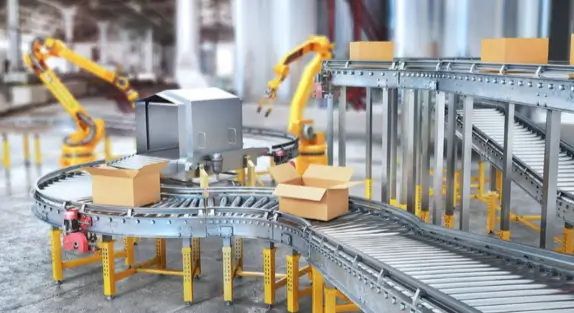
Smart manufacturing is no longer in the conceptualization phase. Production plants across industries are adopting connected machinery, real-time analytics and intelligent automation in processes that were once reliant on fixed schedules and manual supervision. The results — less waste, more throughput, tighter quality control — are quantifiable and well documented. Within this broader transformation in manufacturing, packaging has become one of the leading areas for technology-based impact. Now-a-days, a modern Cartoning Machine does far more than just folding the cardboard and closing the flaps. It acts as a precision tool within a connected production environment that affects everything from line efficiency to regulatory paperwork.
Smart Packaging Technologies
Smart packaging technology is defined as a system that can sense, communicate and react to information. Previous generations of packaging equipment used to be standalone — packing, capping and labeling machines were purely mechanical workhorses that didn’t generate data on the rest of the production line. Sensor arrays track fill levels, carton geometry, seal pressure, and throughput rates in real time. Vision systems check label position and print quality at line speed. The nonconforming unit is ejected automatically by the rejection mechanism, without any intervention from operators. All of these functions generate data that bubble up into manufacturing execution systems, providing operation managers with a real-time view of package performance by every shift. Connectivity standards will be significantly more mature by 2026. Packaging equipment can now share data in a bidirectional manner with enterprise resource planning systems through OPC-UA communications protocols, a development that leads to a closed-loop manufacturing environment in which packaging production directly informs inventory management, order fulfillment, and quality reporting.
Benefits of Automation
The operational advantages of smart packaging automation are proven, but continue to grow as the technology evolves. Speed and consistency still form the core of the benefits — automated machinery can replicate output quality from run to run far longer than any manual operation.
What’s becoming clearer is the additive value of manufacturing data. Those that have been running automated packaging lines for a number of years now have arm-length datasets to back continuous improvement efforts, predictive-maintenance scheduling, and reliable capacity Planning. The equipment pays for itself in reduced labor and waste; the data that it produces keeps on giving, indefinitely.
There were also a lot of improvements in flexibility. Format changes that once caused prolonged stoppages and required heavy engineering support can now be made in minutes with the use of programmable recipe management – bringing automated packaging within the reach of producers with multiple products sharing the same lines.
Industry Applications
Smart packaging automation is well established across sectors with the most stringent quality and compliance requirements. Pharmaceutical producers use automated cartoning to comply with serialization, verify tamper-evidence, and document batches – areas where manual processing leads to untenable regulatory risk.
Food and beverage manufacturers use automated solutions to fulfil retailer’s shelf-ready packaging requirements against the backdrop of widely varying, often high volume production demands typical of the sector. Cosmetics and personal care brands employ precision cartoning to preserve the presentation standards that have a direct bearing on retail sell-through and brand perception.
Medical device manufacturers are also among the fastest growing sectors for smart packaging investment, as international standards on packaging integrity tighten and traceability requirements embedded in revised regulatory frameworks (scheduled to go live through 2026) become even more stringent.
Future Outlook for 2026 and Beyond
The direction of smart packaging technology is evolving towards increased autonomy, tighter system integration and enhanced sustainability capability. AI solutions are moving from quality inspection to whole production optimization — adapting running parameters on the fly to supplied material properties, environmental factors, and downstream demand signals.
Sustainability engineering is impacting equipment requirements in the class. The new generation Cartoning Machine platforms to be launched on the market are developed to be green friendly utilizing the light weight board, recycled fiber and plant-based packaging materials demands from the brand owner commitments and the extended producer responsibility legislation being implemented in the major market worldwide.
Additionally, the digital twin is making its way into packaging, allowing producers to simulate equipment performance, experiment with format changes and run maintenance scenarios in a virtual environment before bringing these tasks to the production floor — minimizing risk and speeding up continuous improvement cycles.
See also: Renewable Energy Technology Trends
Conclusion
The introduction of smart packaging has redefined the expectations that cartoning machine manufacturers can deliver. Speed, accuracy, compliance functionality, and data intelligence are not premium features – they are baseline expectations in production environments competing in 2026 and beyond. The manufacturers that are investing in the next-generation smart cartoning systems today are not merely replacing equipment. They are laying the groundwork for manufacturing’s next 10 years of operational demands.